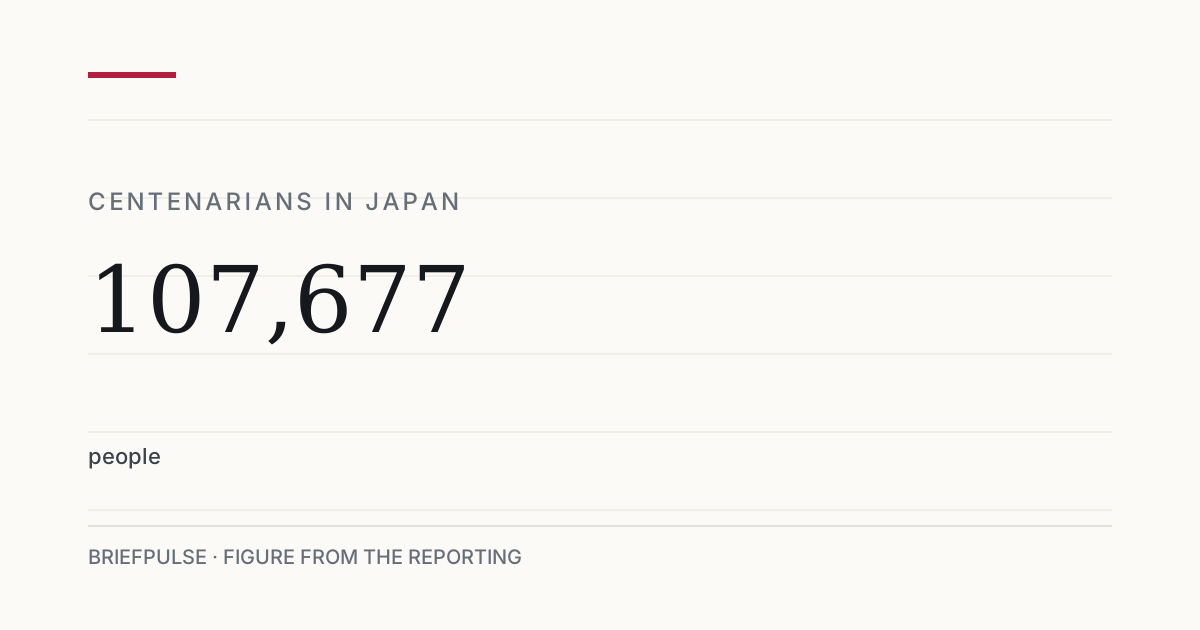
The health ministry said Tuesday that the number of centenarians in Japan reached 107,677 this year, up 7,914 from last year and topping the 100,000 mark for the first time. Nearly all of them — 94,298 — were women. That makes the milestone not just a national statistic but a notably gendered one.
The ministry also said the number of people who turned or are expected to turn 100 this year or before March 31 next year is 54,294, of whom 45,769 are women. They will receive congratulatory letters from the prime minister and silver-plated cups as gifts. The evidence does not describe how those gifts are distributed, where ceremonies take place, or whether the practice has changed.
For readers in Japan, working with Japan, or visiting, the figure is a reminder that extreme longevity is a mainstream part of the country's social landscape. But the evidence is thin on practical consequences. It does not set out what the centenarian count means for care provision, pensions, transport, housing, or local services, and it gives no regional breakdown. It also does not say how visitors might encounter this milestone, if at all.
What the source states is limited to the count, the increase, the gender split, the number expected to reach 100, and the congratulatory gifts. Our reading is that this is a demographic marker worth noting, but it should not be stretched into a guide to daily life or travel. Readers should treat it as context, not as a practical explanation of services or access.